
Though sustainable use is always directly or at least indirectly on the agendas of multilateral processes relevant to biodiversity, there are currently some interesting and mutually supportive developments. These developments create important openings, but also some governance risk as any rearticulation of sustainable use through a protection lens may dilute or confuse long-standing sectoral understandings of sustainability that have been in long development in policy and practice.
Switzerland and South Africa bring socio-economic dimensions into CITES listing discussions
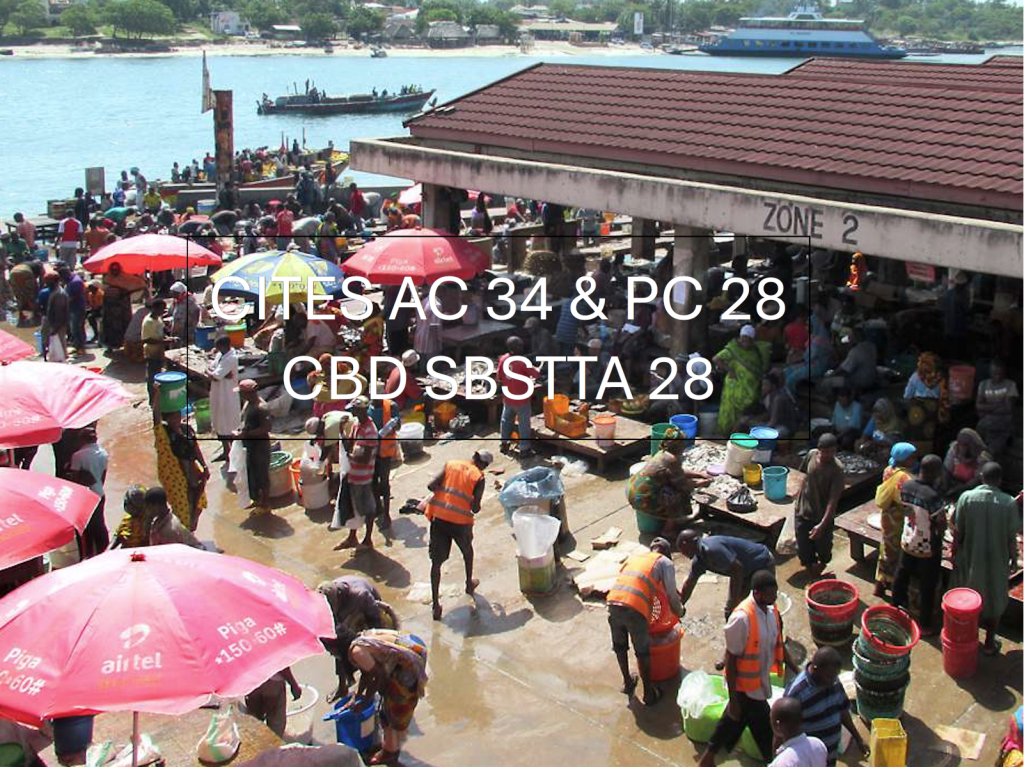
Switzerland and South Africa’s working document for the recent CITES Committee meetings (AC34 Doc. 44 / PC28 Doc. 28) is a significant proposal that seeks to adapt the criteria used to evaluate amendments to the CITES Appendices. It proposes to incorporate consideration of socio-economic impacts, livelihood implications, trade dynamics, and potential conservation risks and benefits alongside the existing biologically focused criteria. The significance of this proposal is that it shifts attention from biological risk alone to whether regulatory choices will actually deliver conservation outcomes once market, livelihood, tenure, and incentive responses are considered.
For example, the document proposes that amendments include the following socio-economic considerations:
- Consider the different stages of supply chains and provide information on market structure and how the market will likely respond to changes in trade policy (including trade restrictions or trade bans). Include factors such as market size and price trends.
- Describe the nature of consumer demand and how consumers, and therefore market prices, will likely respond to changes in supply (i.e. price elasticity of demand).
- Provide information gathered from consultations with resource users and other affected stakeholders indicating areas of disagreement, taking into account property and resource rights.
- Describe potential positive and negative impacts on local livelihoods and cultural and traditional use and how transitions from a formal to informal economy may influence the desired conservation outcome.
Brazil proposes to strengthen the sustainable use objective to rebalance implementation of the CBD’s three objectives
The CBD has three equally important and internationally agreed objectives as set out in Article 1:
- The conservation of biological diversity
- The sustainable use of the components of biological diversity
- The fair and equitable sharing of benefits arising from the utilisation of genetic resources
The second objective aims to ensure that biodiversity is used in ways that do not lead to its long-term decline. It covers fisheries, forestry, wildlife use, ecotourism, wildlife economy activities, agriculture, and other uses of biodiversity that maintain biodiversity while providing benefits to people.
Brazil is requesting the initiation of a process to develop a Programme of Work (PoW) on Sustainable Use of Biodiversity under the CBD. The proposal argues that, while conservation and restoration have received substantial attention within the Convention, sustainable use remains underdeveloped and insufficiently operationalised. It states:
The need for such an integrated approach is particularly relevant for developing countries and megadiverse countries, where biodiversity is not only a conservation priority but also a basis for sustainable development, local livelihoods, scientific and technological innovation, and value addition. A strengthened programme of work could help Parties explore new approaches and options for sustainable use, including bioeconomy, circular economy, biotrade, community-based enterprises, biodiversity-based products and services, timber and non-timber forest products, and other activities that enhance biodiversity while generating social and economic benefits.
The request builds on CBD Decisions 16/12 and 16/15, the Addis Ababa Principles and Guidelines for Sustainable Use, and the Kunming-Montreal Global Biodiversity Framework. Importantly, Brazil states that this work should complement, not replace or weaken, CBD’s ongoing work in other areas.
The immediate request is not adoption of a new programme, but agreement to launch a structured process to explore its design, safeguards, and scope. The Brazilian initiative can therefore be read as an effort to give sustainable use a CBD policy home comparable to the institutional attention already given to protected areas and restoration.
It also supports a biodiversity and wildlife economy narrative, including bioeconomy, biotrade, circular economy, value addition and biodiversity-based products and services, while keeping sustainable wildlife management as one component of a wider sustainable-use architecture. This point is also relevant to Brazil’s wider positioning on connectivity and integrated landscapes: connectivity, sustainable use, and the biodiversity economy all move beyond isolated protected sites toward governance of ecological and economic flows across landscapes and seascapes.
Again, this should be welcomed by productive sectors , though it is important to be cognisant of a corresponding risk: unless the process is carefully anchored in existing sectoral texts, the CBD could gradually develop a parallel interpretation of sustainable use. For fisheries, forestry, and wildlife-use sectors, this could muddy the waters by introducing a parallel set of sustainability thresholds or safeguards that do not fully reflect decades of work under competent sectoral bodies, including fisheries management, the ecosystem approach to fisheries, harvest strategies, and resource-rights-based governance.
The discussion emerging in the CBD is in some ways analogous to the CITES discussion. Both processes point toward a broader assessment of whether conservation measures are effective in practice, not only whether they are precautionary in design.
Non-paper on the CBD programme of work on protected areas
The non-paper addresses a “strategic review of and update to the programme of work on protected areas” with regard to the implementation of the GBF. It includes consideration of sustainable use as follows:
Provide guidance on addressing and managing the use of wild species within protected areas and other effective area-based conservation measures, where such use is allowed, in a manner that mitigates risks to biodiversity and human health, consistent with site-specific conservation objectives and zoning while ensuring the sustainable, legal and safe use across relevant stages of the use chain…
Strengthen guidance on how sustainably managed production landscapes and biodiversity-friendly practices can complement protected areas and other effective area-based conservation measures… in particular by promoting nature-based solutions and/or ecosystem-based approaches…
Promote the sustainable ecosystem-based extraction of species in protected areas and other effective area-based conservation measures, especially in marine areas.
Notably, however, the SBSTTA negotiations resulted in a revision (CBD/SBSTTA/28/L.6) of the second paragraph above to focus guidance on sustainable management only in productive landscapes and explicitly “to support while being distinguished from protected areas and other effective area-based conservation measures.” Further, the third paragraph above was dropped. These changes undermine the interest of Brazil and others to recognise sustainable use as a core objective of the CBD rather than an instrument to support area-based protection.
Nevertheless, these considerations in the CITES and CBD processes show that sustainable use is currently being addressed in fora where use has often been treated as something to be managed within a protectionist approach to conservation, rather than as its own objective for wildlife-positive production systems across landscapes and seascapes.
Sustainable use and the ecosystem approach
Taken together, these developments suggest a greater openness among CITES and CBD Parties, or at least a greater interest, in reaffirming the ecosystem approach as a basis for balancing conservation, sustainable use and benefit-sharing. As stated in CBD Decision V/6 (2000):
The ecosystem approach is a strategy for the integrated management of land, water and living resources that promotes conservation and sustainable use in an equitable way. Thus, the application of the ecosystem approach will help to reach a balance of the three objectives of the Convention: conservation; sustainable use; and the fair and equitable sharing of the benefits arising out of the utilisation of genetic resources.
Today, 26 years on, there is an opportunity to make that balance more operational by recognising sustainable use as a pathway for delivering conservation outcomes that benefit both wildlife and people, while ensuring that any new CITES or CBD process builds on sectoral use foundations rather than creating a divergent or protectionist reinterpretation of sustainable use.