
The mission of IUCN (the International Union for Conservation of Nature and Natural Resources) is clear and longstanding:
Influence, encourage and assist societies to conserve the integrity and diversity of nature and ensure that any use of natural resources is equitable and ecologically sustainable.
A close reading of the IUCN 2025 Annual Report, however, suggests that the Union may in part be drifting away from this mission – notably from the second half, which concerns equitable and sustainable use.
Missing language, missing priorities?
The Annual Report also scarcely mentions the core action verbs of IUCN’s mission – influence, encourage, assist. They appear once, in a description of what is called IUCN’s “mandate” rather than its mission, and indirectly once more in a reference to government partners who “share IUCN’s mission and values.” Beyond this, reporting systematically on these core actions is largely absent from the narrative.
The first mission outcome – conserving nature’s integrity and diversity – remains visible throughout the report. But the second outcome – ensuring that natural resource use is equitable and ecologically sustainable – is much less evident.
Sustainable use and the GBF: a major gap
The Annual Report highlights that “IUCN continued to support the implementation of the Kunming-Montreal Global Biodiversity Framework” (GBF), but the support is clearly not even. This is especially evident with regard to GBF Targets 5 and 9 on the use of wild species. Together, these two targets call for:
- sustainable, safe and legal harvesting and trade of wild species
- management and use of wild species that benefits people
- respect for customary sustainable use by Indigenous Peoples and local communities
Targets 5 and 9 align directly with IUCN’s mission. Yet the Annual Report shows minimal engagement with them.
A graphic on page 40 (Fig. 1) illustrates IUCN’s contributions to the various GBF targets. The combined contribution to Targets 5 and 9 is shown as less than 1% of the portfolio. This is an uncomfortably small allocation for an issue that sits at the heart of IUCN’s stated purpose.
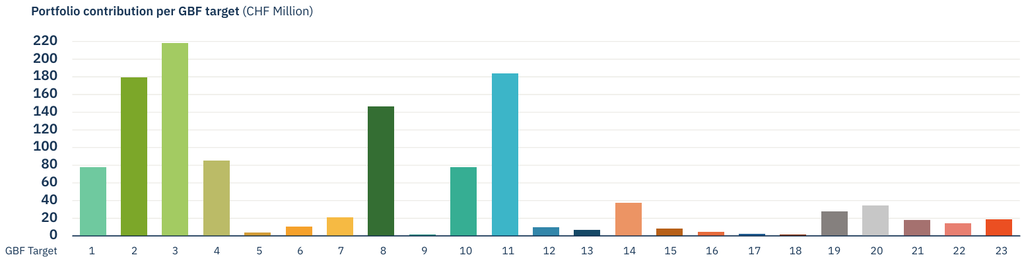
Fig 1. IUCN contributions to GBF Targets
Fragmented and inconsistent references
There are scattered mentions of sustainable use, but they are rather inconsistent and peripheral:
- Target 5 appears in graphics in the People and Land sections of the report, but Target 9 does not
- In the Nature 2030 Programme graphic, Target 5 is not linked to Water, Ocean, or Climate – three of IUCN’s core programmatic areas
- Target 9 appears only in the Ocean section and again only in relation to the Ocean component of the Nature 2030 Programme graphic
These minor references indicate some focus on sustainable use, but there is no substantive discussion of how IUCN contributes to Targets 5 and 9, notably in terms of how these targets relate directly to its mission.
Commissions still remember the mission, but the Secretariat seems not to
Two Commission descriptions, however, explicitly reference sustainable use:
- The Species Survival Commission (SSC) “influences, encourages and assists societies… ensuring that the use of species is equitable and sustainable.”
- The World Commission on Environmental Law (WCEL) “assures… the sustainable use of nature.”
A third indirectly references sustainable use:
- The Commission on Environmental, Economic and Social Policy (CEESP) “generates and disseminates knowledge, mobilises influence and promotes actions to harmonise the conservation of nature with the critical social, cultural, environmental and economic justice concerns of human societies.”
These statements echo the mission faithfully. And they stand in contrast to the Secretariat’s reporting, where sustainable use is not nearly as visible.
Policy direction: stopping use rather than making it sustainable?
The report highlights IUCN’s engagement at CITES COP20, including work on sustainable use and trade regulation. However, the “new directions” for IUCN policy emphasise environmental crimes: “crimes such as wildlife trafficking, waste violations and illegal logging, mining and fishing.”
This framing focuses on stopping use, not ensuring use is sustainable and legal. The shift is subtle but important. Enforcement appears to replace management; prohibition appears to replace governance.
A few promising signs, but maybe not enough
There are some isolated indications of potential support for sustainable use:
- A GEF project on “indicators of (un)sustainable wildlife use and trade”
- The Ocean Programme’s target that marine resource use should “generate positive biodiversity outcomes and sustain livelihood benefits”
- An SSC/CEESP specialist group publication on IUCN Guidelines on Harvesting Threatened Species
These examples show that sustainable use has not disappeared entirely. But they appear to be exceptions, rather than priorities.
The transformational agenda leaves out sustainable use
The “eight transformational focus areas for nature and people” should be the place where sustainable use is embedded, particularly given its centrality to IUCN’s mission. Instead, the focus is on areas such as sustainable agriculture, just energy transition, and sustainable cities. Only the focus area on regenerative blue economy could relate to the sustainable use of wild species – but even here, the emphasis in IUCN’s new directions is on addressing illegal, unreported and unregulated fishing rather than on influencing, encouraging, and assisting measures for sustainable and equitable harvesting of wild fish.
A mission half‑remembered?
So, has IUCN forgotten its mission to “ensure that any use of natural resources is equitable and ecologically sustainable”? Based on the 2025 Annual Report, it appears that this might be the case.
The Union continues to champion conservation of nature’s integrity and diversity, but the sustainable‑use dimension – once a defining feature of IUCN’s identity – seems to have become marginal, fragmented, and under‑resourced.
With less than 1% of its portfolio contributing to GBF Targets 5 and 9, and only fleeting references to sustainable use across its reporting, IUCN’s new directions might be heading the wrong way.